Medically reviewed by Dr Sin Yong · Last reviewed · 13 min read · Assessed personally by Dr Sin Yong · Jump to questions
Male pattern hair loss is not hair falling out — it is follicles shrinking. Under DHT, genetically sensitive follicles at the temples and crown produce progressively finer, shorter hairs until they produce none. The strategy follows the biology: defence early beats rescue late.
WhatsApp Dr Sin Yong →A receding hairline in men is usually male pattern hair loss: DHT gradually shrinks genetically sensitive follicles at the temples and crown. Treatment aims to hold the hair that remains, with finasteride and minoxidil as the evidence-based foundation and procedures as adjuncts. A maturing hairline, by contrast, shifts slightly in early adulthood and then stabilises.


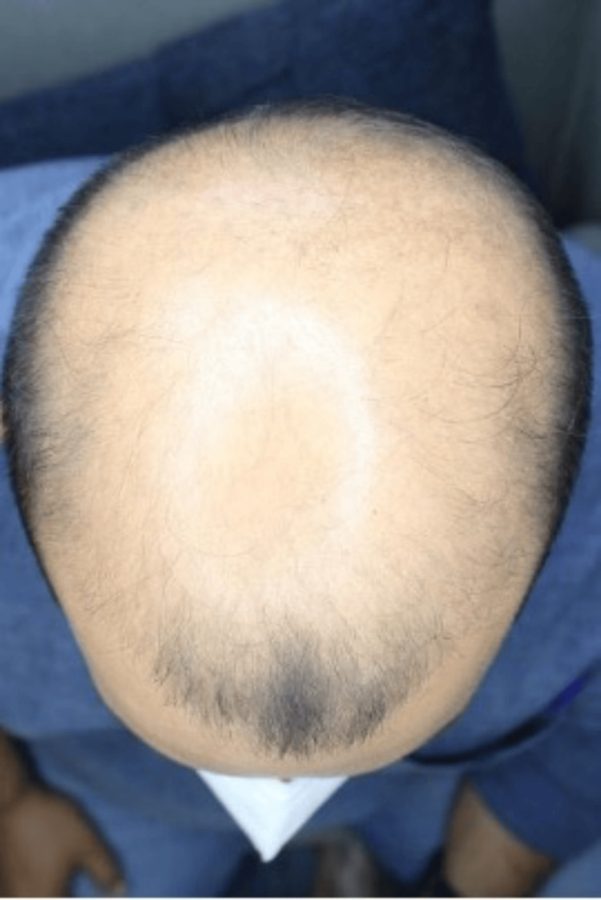
Testosterone converts to DHT via 5-alpha-reductase; in men with the inherited sensitivity, DHT progressively miniaturises follicles at the temples and crown — the Hamilton–Norwood map. Each growth cycle the affected follicle produces a finer, shorter hair, until it is a barely-visible vellus hair, and finally silent. Clinical reviews frame it plainly: pattern loss is treatable and worth treating, and treatment acts on follicles that are miniaturising, not on those that are gone [1]. The occipital fringe is DHT-resistant — the biology behind both the pattern and transplantation.
Two pharmacological anchors carry decades of randomised evidence: finasteride, which lowers DHT at its source, and minoxidil, which supports follicle activity — reviewed as first-line in pattern hair loss [1]. Dr Sin Yong's male programme and medication page cover suitability and side-effect counselling honestly; adjuncts — Regenera Activa micrografting, the H2LT laser protocol — build on that base, not instead of it. A hairline held for a decade is a treatment success even if the mirror never changes: in this disease, unchanged is the win.
Caffeine shampoos and biotin (without deficiency) have marketing, not trial evidence. “Waiting to see how bad it gets” is the costliest strategy in the field — every year of DHT exposure retires more follicles beyond rescue. And a transplant into an untreated scalp relocates hairs onto a battlefield where the native loss continues around them: medical control first is the honest sequence.
“A hairline is easier to hold than to reverse — the earlier it is defended, the more survives.”
— Dr Sin Yong
Every month a man waits to 'see how bad it gets', the answer arrives with fewer follicles left to save. Pattern loss treatment defends hair that still exists — miniaturised is recoverable, bare is mostly not. The most useful consult I do is the one that happens two years earlier than the patient planned.
Use the short enquiry form instead →
Leave your name, mobile number and email and the clinic will contact you directly. No obligation.
Prefer a preliminary view first? You can also WhatsApp a photo of the area for Dr Sin Yong to review before you decide on a visit.
| Type / look-alike | How to recognise it | What it needs | What does not work |
|---|---|---|---|
| Maturing hairline | Small, even shift in the late teens or twenties, then stable | Examination, reassurance and periodic review | Starting treatment for a stable hairline |
| Male pattern hair loss | Progressive temple recession or crown thinning, with finer, shorter hairs at the margin | Medical control of DHT effect, with adjuncts if suitable | Caffeine shampoos, biotin without a deficiency, waiting |
| Traction hairline | Thinning along the edges after years of tight hairstyles | Reducing the tension and examining the scalp | Treating it as DHT-driven pattern loss |
| Frontal fibrosing alopecia | Band-like scarring recession, often with eyebrow loss | Prompt assessment by a dermatologist | Waiting, or cosmetic fixes without a diagnosis |
| Diffuse shedding after illness or stress | Thinning across the whole scalp rather than at the temples | Trigger review and scalp examination | Treatment aimed at the hairline alone |
Treatment acts on follicles that are still miniaturising; follicles that have gone silent are not revived by any treatment.
Inheritance is polygenic and comes from both sides, so your own temples and crown, examined over time, are the real data.
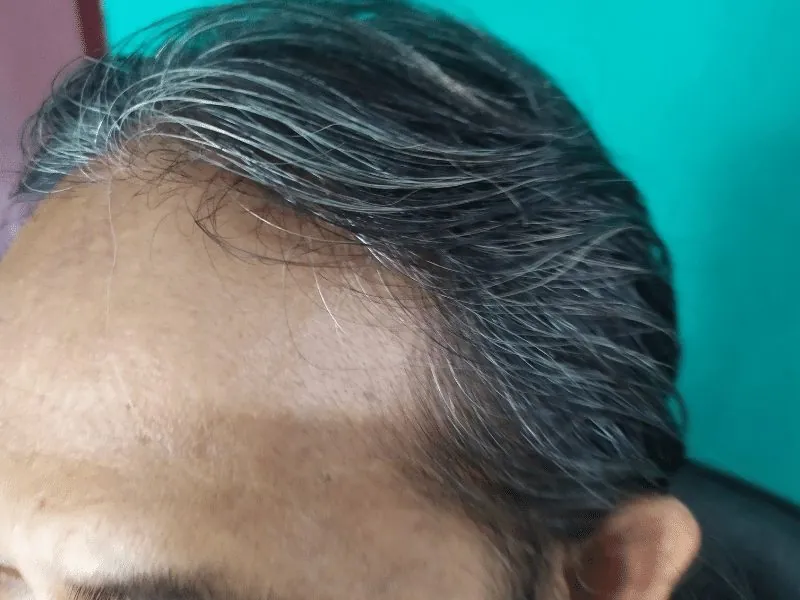
A maturing hairline shifts slightly and evenly in the late teens to twenties and stabilises. Progressive temple recession that continues, or crown thinning, is pattern loss.
Reported sexual side effects affect a small minority in trials and typically resolve on stopping. This deserves an honest physician conversation, not a forum verdict — either direction.
No — by any treatment, at any price. Miniaturising follicles can be rescued; silent ones cannot. This is why timing dominates outcome.
Hair cycles are measured in months. Three to six months is the honest minimum before judging any regimen; visible change often trails biological change.
It relocates DHT-resistant follicles — it does not stop the disease. Untreated, native loss continues around the grafts. Control first, transplant as a planned step if needed.
Inheritance is polygenic, from both sides. Family history informs risk; your own temples and crown, examined over time, are the real data.
Medically reviewed by Dr Sin Yong, MBBS (NUS), MRCS (Edinburgh) · Last updated 7 September 2026 · Editorial policy
Dr Sin Yong starts with a scalp assessment that maps where follicles are miniaturising and stages the pattern on the Hamilton–Norwood scale, so the plan is aimed at the follicles that are still saveable. Medical treatment is the base: finasteride to lower DHT and minoxidil to support follicle activity, with suitability and side effects discussed before anything is prescribed.
Procedures are layered on that base rather than offered instead of it: Regenera Activa autologous micrografting and his H2LT laser protocol are used as adjuncts. A hair transplant is treated as a planned step once the loss is medically controlled, not as a first answer, and any regimen is given months before it is judged, because hair cycles are slow.
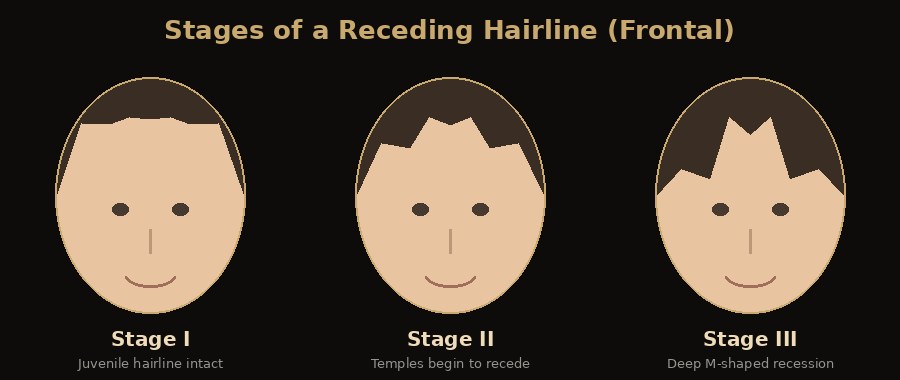
The Hamilton–Norwood scale grades male pattern hair loss in seven stages, from no recession to a horseshoe of hair at the sides and back. It describes where loss has reached, which helps in tracking change over time and in judging how much hair is still miniaturising rather than gone.
Stage 1 is a full juvenile hairline. Stage 2 shows slight, symmetrical recession at the temples and overlaps with a mature hairline. Stage 3 is the first stage generally regarded as pattern loss, with deeper temple recession; a variant, 3 vertex, adds early thinning at the crown. Stages 4 and 5 bring further frontal recession and a larger thinning area at the crown, separated by a band of hair that narrows over time. In stage 6 that band is lost and the front and crown join, and stage 7 leaves only the fringe at the sides and back, which is resistant to DHT.
The stage matters less than the trend. Two men at the same stage can be in very different positions if one is still miniaturising quickly, so photographs and examination over time carry more weight than a single label. Staging is part of the scalp assessment, alongside mapping where miniaturised hairs sit.
| Option | What it does | What it cannot do | Typical recovery | Who it tends to suit |
|---|---|---|---|---|
| Finasteride (oral, prescription-only) | Lowers DHT by blocking its conversion from testosterone, slowing miniaturisation | Revive follicles that have stopped producing hair | Not a procedure; side effects are counselled beforehand, and months pass before a regimen can be judged | Men with active temple or crown miniaturisation |
| Minoxidil (topical; oral only on prescription) | Supports follicle activity and the growth phase | Act on DHT, so loss continues if it is used alone; regrow hair on bare skin | Not a procedure; early shedding can occur as follicles cycle | Miniaturising follicles, often alongside finasteride |
| Regenera Activa autologous micrografting | Micrografts prepared from a small sample of the patient's own scalp are applied to thinning areas | Replace medical treatment or revive bare areas | Minor tenderness at the sample and treated sites | An adjunct built on a medical base |
| H2LT laser protocol | Low-level laser energy directed at the dermal papilla of scalp follicles | Replace medical treatment or act on DHT | What to expect is discussed before treatment | An adjunct built on a medical base |
| Hair transplant, referred for surgical hair restoration | Relocates DHT-resistant follicles from the back of the scalp to the hairline | Stop the underlying loss around the grafts | Surgical recovery, guided by the operating team | Stable, medically controlled loss with adequate donor hair |
| No treatment, or cosmetic measures | A shorter cut, styling or concealers change how recession looks | Slow miniaturisation | None | A mature hairline, or men who prefer not to treat |
| Feature | Mature hairline | Receding hairline (pattern loss) |
|---|---|---|
| When it happens | Late teens to twenties, then stabilises | Can begin at any age after puberty and continues |
| How it moves | A small, even rise across the whole hairline | Deepening recession at the temples, often forming an M shape |
| Hair at the margin | Normal thickness along the new line | Fine, short, miniaturised hairs along the edge |
| Crown | Unaffected | May thin as well |
| Over time | Stays where it settled | Keeps progressing on photographs and examination |
| What it needs | Usually observation only | Assessment, and treatment if you want to keep the hair |