Conditions · Body · Texture

Keratosis Pilaris (“Chicken Skin”)

Medically reviewed by Dr Sin Yong · Last reviewed · 12 min read · Assessed personally by Dr Sin Yong · Jump to questions

Keratosis pilaris is the sandpaper skin of the upper arms, thighs and sometimes cheeks: hundreds of tiny rough bumps where keratin has plugged the opening of each hair follicle. It is one of the most common skin findings in humans, it is genetic, it is harmless — and it is managed, not cured.

WhatsApp Dr Sin Yong →
Invited by Device Makers to Share His Expertise
International KOL for 14+ device brandsShared his clinical expertise with 500+ doctors across AsiaMBBS (NUS) · MRCS (Edinburgh) · MSc with Distinction (Queen Mary, London) · MSc (Cardiff)Every assessment personally by Dr Sin Yong

Keratosis pilaris is the rough 'chicken skin' of the upper arms, thighs and sometimes cheeks, caused by keratin plugging the opening of each hair follicle. It is genetic, common and harmless; it is managed rather than cured, with keratolytic skincare first and energy-based treatment considered only for persistent redness or texture.

In brief
  • Keratosis pilaris is rough, chicken-skin bumps on the upper arms, thighs and sometimes cheeks, caused by keratin plugging follicle openings.
  • It is genetic, common and harmless, and is associated with dry skin and eczema tendency.
  • It is managed rather than cured, with keratolytic moisturisers as the backbone; scrubbing tends to inflame it.
Key takeaways
  • Keratosis pilaris is rough, 'chicken skin' bumps on the upper arms, thighs and sometimes cheeks, caused by keratin plugging follicle openings.
  • It is genetic, common and harmless, and is associated with dry skin and eczema tendency.
  • It is not acne and not an infection, and scrubbing tends to inflame it.
  • It is managed rather than cured, with keratolytic moisturisers as the backbone.
  • Laser is considered only where redness or texture persist despite consistent skincare.

Key Facts

Prevalence
Extremely common — affects a large share of adolescents and adults to some degree
Mechanism
Keratin plugs in follicular openings, often with a coiled hair trapped beneath
Genetics
Strong familial pattern; associated with dry skin and atopic (eczema) tendency
Distribution
Upper outer arms, thighs, buttocks; cheeks in younger patients
Natural course
Often improves with age; waxes with dry weather and friction
Evidence-backed care
Keratolytic moisturisers (urea, lactic acid, salicylic acid) as maintenance; lasers for redness/texture in studies
Who assesses this
A physician — though most KP is managed with the right routine
Typical first step
Consistent keratolytic moisturising; devices only where creams plateau

What does keratosis pilaris look like?
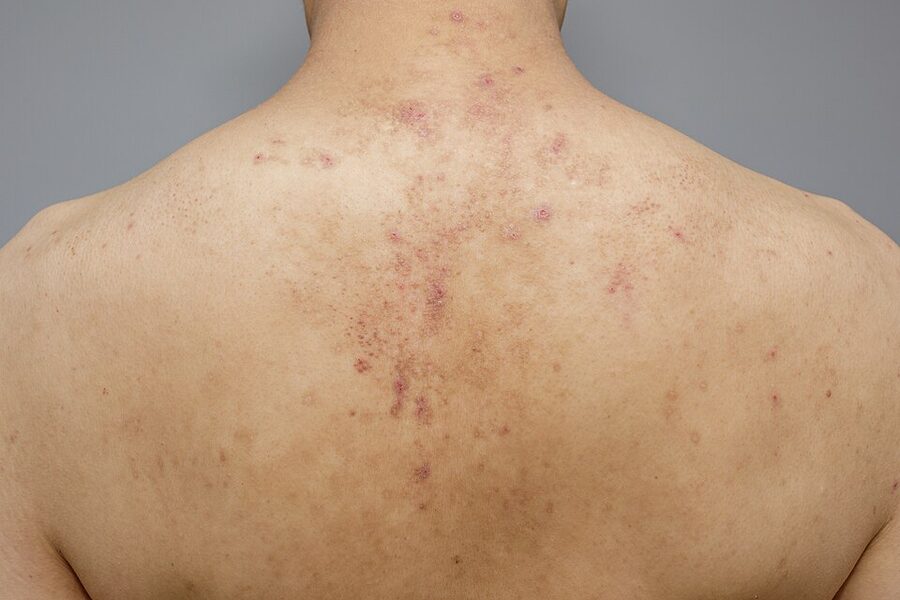
Keratosis pilaris: rough follicular papules
Keratosis pilaris: rough follicular papules. Image: Impetus01, via Wikimedia Commons (CC BY-SA 4.0).
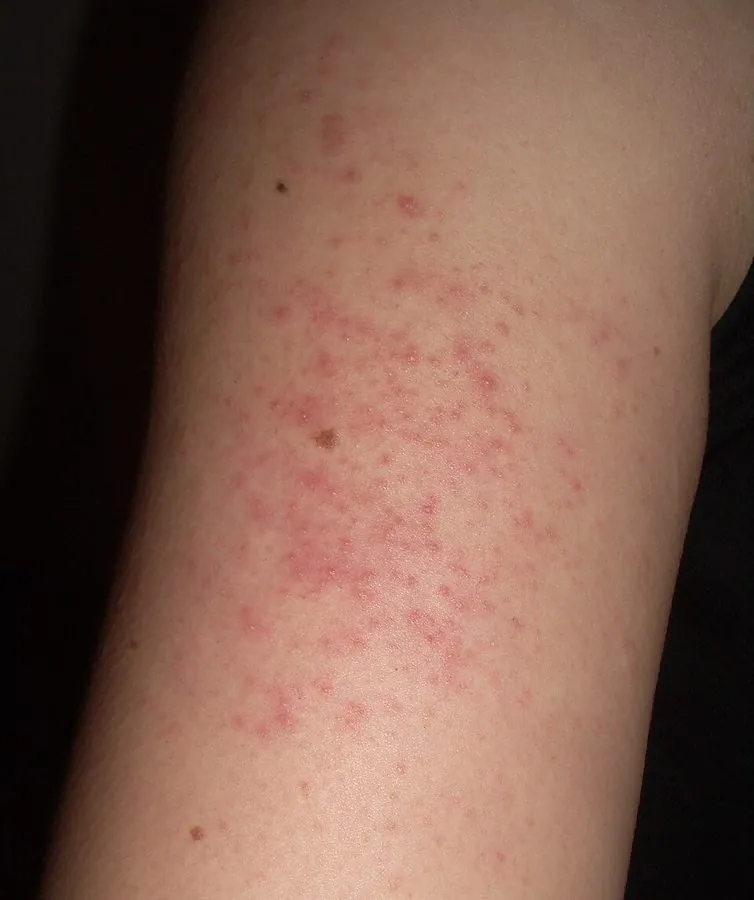
Rough follicular bumps on the upper arm
Rough follicular bumps on the upper arm. Image: Irja from San Francisco, via Wikimedia Commons (CC BY-SA 2.0).
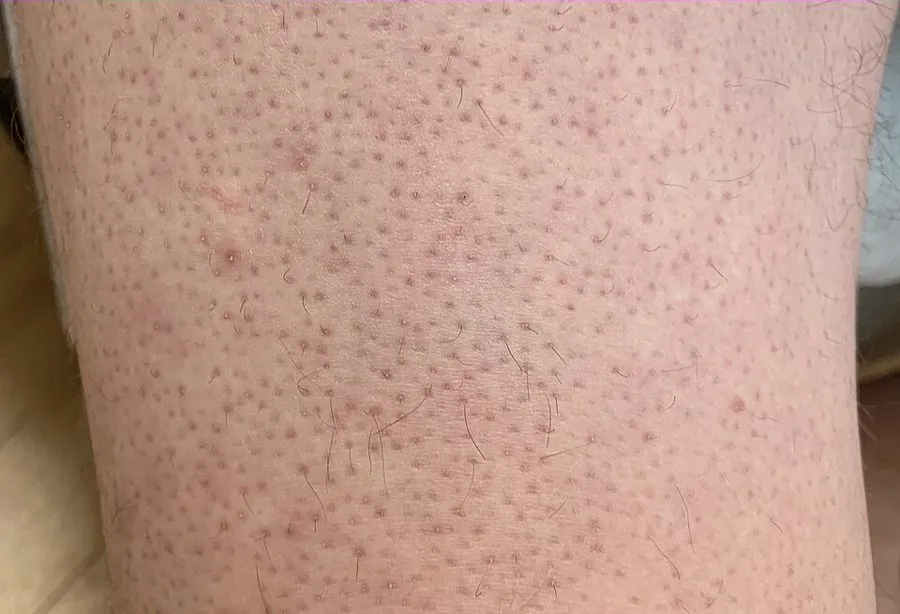
Keratosis pilaris over the leg
Keratosis pilaris over the leg. Image: Dermanonymous, via Wikimedia Commons (CC BY-SA 4.0).

What are the rough bumps, actually?

Each bump is a follicle whose opening has been capped by a small plug of keratin — frequently with a fine hair coiled underneath it. Reviews of the condition frame it as a disorder of follicular keratinisation with strong genetic loading and a well-known association with dry skin and atopy [1]. Nothing is infected, nothing is clogged with “dirt”, and the bumps are not acne — three misunderstandings behind most of the scrubbing this condition attracts. Redness around the bumps (keratosis pilaris rubra) is part of the same spectrum.

Managed, not cured

KP is constitutional: the follicles that plug today will tend to plug again, which is why every honest treatment framing is maintenance. The evidence review of intervention studies supports keratolytic moisturisers — urea, lactic acid, salicylic acid — as the backbone, applied consistently rather than heroically [2]. Improvement takes weeks and reverses when stopped; that is the deal. The condition also tends to soften with age on its own — a rare piece of good news in dermatology worth saying out loud.

What actually works beyond moisturiser

For patients who have outgrown what creams can do, intervention studies report improvement in roughness and redness with laser-based approaches — vascular lasers for the red component and fractional or long-pulsed systems for texture — with the caveat that results in the literature are partial and maintenance still applies [2]. In Singapore skin, device and settings choice must respect pigment risk. Where KP sits alongside broader body-skin goals, laser-based smoothing programmes such as FSX can be assessed; where the real complaint is dark, rough follicles after years of friction and shaving, that conversation overlaps with laser hair removal, which addresses the trapped-hair component directly.

What doesn't work for keratosis pilaris?

Aggressive scrubbing — friction inflames follicles and deepens the redness; KP responds to chemistry (keratolytics), not force. Picking the bumps — trades a rough dot for a scar or a dark mark. Cutting out food groups — no diet has evidence here. And chasing a cure — a genetic keratinisation pattern does not have one, and anyone selling one is selling.

“Keratosis pilaris responds to chemistry, not force — you cannot scrub off a follicular plug without inflaming the follicle you scrubbed.”

— Dr Sin Yong

Dr Sin Yong’s Viewpoint

KP responds to chemistry, not force — and nearly every patient I see has spent years scrubbing at it. The honest programme is unglamorous: consistent keratolytic moisturising, gentle handling, and lasers only where creams plateau. It is also one of the few conditions that genuinely improves with age, which deserves saying out loud.

Prefer Not to Use WhatsApp?

Use the short enquiry form instead →

Leave your name, mobile number and email and the clinic will contact you directly. No obligation.

Your details are delivered directly to Dr Sin Yong's clinic team.

Thank you — your enquiry has been received. The clinic will contact you during opening hours (Mon–Fri 10am–8pm, Sat 11am–3pm).

Prefer a preliminary view first? You can also WhatsApp a photo of the area for Dr Sin Yong to review before you decide on a visit.

Which type do you have?

Keratosis pilaris and the conditions it is mistaken for
Type / look-alikeHow to recognise itWhat it needsWhat does not work
Keratosis pilaris, plain rough typeRough, skin-coloured follicular bumps on upper outer arms or thighsConsistent keratolytic moisturiser, gentle handling, avoiding friction and hot showersScrubbing, picking and food-group exclusion diets
Keratosis pilaris rubra, red typeSame bumps with redness around each follicleGentle care first, with vascular laser considered if redness persistsHarsh exfoliation, which deepens redness
KP with post-inflammatory dark dotsDark dots around follicles in deeper skin tonesGentle treatment, no picking, and pigment-aware careAggressive scrubbing or lasers without regard for pigment risk
Acne or folliculitis (look-alike)Inflamed, pus-filled or tender bumps rather than uniformly rough onesAssessment for infection or acne, then targeted treatmentKeratolytic routine alone when infection is present
Dry skin or eczema (look-alike)Itchy, scaly patches rather than discrete follicular plugsHydration, barrier care and eczema managementTreating it purely as KP with exfoliating products

What does not work, and why

When to see a doctor

Myths we hear in clinic

“Keratosis pilaris is acne or caused by dirt.”

The plugs are keratin, not comedones or dirt, and acne treatments mostly irritate it.

“Scrubbing hard will clear the bumps.”

Keratosis pilaris responds to chemistry, not force, and friction inflames the follicles that were scrubbed.

Questions Patients Actually Ask

Is keratosis pilaris acne?+

No — the plugs are keratin, not comedones, and there is no bacterial driver. Acne treatments mostly irritate it.

Why does it get worse in air-conditioning?+

Dry air dries the skin, and dryness accelerates follicular plugging — the same reason KP flares in winter climates.

Will my KP ever go away?+

It commonly softens with age, and many adults see it fade substantially. Until then it is controllable with consistent keratolytic moisturising.

Can laser cure keratosis pilaris?+

Laser can improve the redness and texture — studies show partial, worthwhile gains — but it does not switch off the genetic tendency. Managed, not cured, remains the honest frame.

Is it related to eczema?+

They travel together — KP is more common in people with atopic tendency and dry skin. Managing overall skin hydration helps both.

Why are the bumps dark on my skin tone?+

In deeper skin tones the inflammation around each follicle can leave post-inflammatory pigment, reading as dark dots. Treating gently — and never picking — protects against this.

How do I get rid of chicken skin on my arms?+
It is controlled rather than removed. Daily use of a keratolytic moisturiser containing urea, lactic acid or salicylic acid softens the plugs over several weeks, and stopping scrubs and hot showers reduces the friction and dryness that keep them coming back. Where roughness or redness persists despite consistent care, laser options can be assessed, with maintenance creams continued alongside.
Is keratosis pilaris contagious?+
No. Keratosis pilaris is an inherited pattern of follicular keratinisation, not an infection, so it cannot be caught or passed on by touch. It often runs in families, which is why several relatives may have the same rough patches on the arms or thighs.
What causes keratosis pilaris?+
Keratin builds up and plugs the opening of each hair follicle, often with a fine hair coiled beneath. It has a strong family pattern and is associated with dry skin and an eczema tendency. Dry air and friction can make it look worse. It is not an infection, not caused by dirt and not acne.
Can keratosis pilaris be fully cured?+
It is controlled rather than cured, because the follicles that plug are constitutionally prone to plug again. Consistent keratolytic moisturising softens the plugs, and laser can be considered for persistent redness or texture, but it does not switch off the genetic tendency. It often softens with age, though no outcome or timeline can be promised.
Which treatment suits keratosis pilaris?+
It depends on how rough, red or dark the bumps are, which areas are affected, your skin tone and whether eczema or dryness is present. Keratolytic moisturisers containing urea, lactic acid or salicylic acid are the usual first step. Where creams plateau, laser options are assessed with pigment risk in mind.
How much does keratosis pilaris treatment cost in Singapore?+
The fee depends on the areas affected, whether skincare alone is enough or laser is considered, the type of laser chosen, and how many reviews are planned. A written quote is given at consultation after examination, and the consultation also decides whether any in-clinic treatment is advised, since many people are managed with the right routine alone.

References

  1. Keratosis Pilaris and its Subtypes: Associations, New Molecular and Pharmacologic Etiologies, and Therapeutic Options — American Journal of Clinical Dermatology (PubMed).
  2. Keratosis Pilaris Treatment: Evidence from Intervention Studies — PubMed.
  3. Keratosis Pilaris — DermNet NZ.

Medically reviewed by Dr Sin Yong, MBBS (NUS), MRCS (Edinburgh) · Last updated 7 October 2026 · Editorial policy

Chicken skin on the upper arms: why it shows up there

“Chicken skin” is the everyday name for keratosis pilaris, and the upper outer arms are where it shows most often because that skin carries many fine hair follicles, tends to be dry, and takes daily friction from sleeves and bag straps. Each rough dot is a follicle opening capped with keratin, which is why the area feels like sandpaper and looks like plucked poultry skin. The same pattern commonly extends to the thighs and buttocks, and in children often to the cheeks.

In Singapore, long hours in air-conditioning dry the skin even in a humid climate, which is one reason the arms can feel rougher in the office than outdoors. Not every bump on the arm is keratosis pilaris: folliculitis tends to be tender or pus-tipped, and eczema forms itchy, scaly patches rather than evenly spaced dots, so a doctor's look is worthwhile when the pattern does not fit. For true keratosis pilaris on the upper arms, the plan is the same as anywhere else: chemistry, not friction.

Keratosis pilaris options compared
OptionWhat it doesWhat it cannot doTypical recoveryWho it tends to suit
Keratolytic moisturisers (urea, lactic acid, salicylic acid)Soften and loosen the keratin plugs, easing roughness with consistent useSwitch off the genetic tendency; the gains fade when use stopsNone; mild stinging on dry or broken skinAlmost everyone with keratosis pilaris, as daily maintenance
Gentle skin care (lukewarm showers, fragrance-free emollient, no scrubbing)Reduces the dryness and friction that aggravate follicular pluggingClear established plugs on its ownNoneEveryone, especially with long hours in air-conditioning
Topical retinoid (prescription)Normalises keratinisation at the follicle openingSuit very dry or eczema-prone skin without irritationDryness or irritation at first in some peoplePersistent roughness where keratolytics have plateaued, after review
Vascular laser for rednessDirected at the redness around the follicles (keratosis pilaris rubra)Flatten the bumps or remove the keratin plugsTransient redness; varies with device and settingsProminent redness that creams do not touch
Fractional or long-pulsed laser for textureDirected at roughness and texture, with partial improvement reported in studiesCure keratosis pilaris; maintenance creams are still neededVaries with device and settings; pigment risk is weighed in darker skinRough texture that persists despite consistent creams
Laser hair removalAddresses the coiled, trapped hair beneath many of the plugsTreat the keratin plug or the redness on its ownTransient redness around the folliclesDark, prominent follicles linked to shaving and trapped hairs
Follow Dr Sin Yong
InstagramTikTokYouTubeThreadsXLinkedInFacebook
Dr Sin Yong · Every assessment personally performed
WhatsApp Enquiry