Conditions · Face · Lines & Wrinkles

Forehead Lines & Frown Lines

Medically reviewed by Dr Sin Yong · Last reviewed · 10 min read · Assessed personally by Dr Sin Yong · Jump to questions

The forehead's horizontal lines and the vertical '11s' between the brows are muscle handwriting: the frontalis raising the brows and the glabellar complex pulling them down and in, creasing the same skin thousands of times a day. Early on the lines exist only in motion; left long enough, they etch in at rest — and one of these muscles is often working overtime for a reason worth diagnosing.

WhatsApp Dr Sin Yong →
Invited by Device Makers to Share His Expertise
International KOL for 14+ device brandsShared his clinical expertise with 500+ doctors across AsiaMBBS (NUS) · MRCS (Edinburgh) · MSc with Distinction (Queen Mary, London) · MSc (Cardiff)Every assessment personally by Dr Sin Yong

Forehead lines and frown lines are made by muscle: the frontalis lifts the brows and creases horizontal lines, while the corrugator–procerus complex pulls the brows down and in to form the vertical '11s'. Lines start in motion and later etch in at rest, so assessment checks brow position and whether the forehead is compensating for heavy lids.

In brief
  • Forehead lines come from the frontalis lifting the brows; vertical 11s come from the corrugator and procerus pulling them down and in.
  • Lines begin as motion-only creases and etch into at-rest folds as dermal collagen thins.
  • Some foreheads work hard to hold heavy lids open, so brow position is examined before any muscle relaxation.
Key takeaways
  • Forehead lines come from the frontalis lifting the brows; vertical '11s' come from the corrugator and procerus pulling them down and in.
  • Lines begin as motion-only creases and etch into at-rest folds as dermal collagen thins.
  • Some foreheads work hard to hold heavy or hooded lids open, so brow position is examined before any relaxation.
  • Botulinum toxin softens muscle movement, while lines already etched at rest also need skin-directed treatment.
  • Face yoga, forehead training and anti-wrinkle creams do not treat lines created by muscle activity or carved dermis.

Key Facts

The authors
Frontalis (horizontal lines) lifting; corrugator–procerus complex (the '11s') pulling down and in
Dynamic → static
Lines begin as motion-only creases and etch into at-rest folds as dermal collagen thins
The compensation trap
A frontalis raising heavy or hooded lids all day manufactures forehead lines as a side effect
Evidence anchor
Botulinum toxin for glabellar and forehead lines is among the most trialled treatments in aesthetics — meta-analyses of randomised controlled trials
The etched remainder
Toxin softens the muscle; a line already carved at rest also needs skin-directed treatment
Screen-life factor
Concentration and squinting recruit the frown complex for hours daily
Who assesses this
An aesthetic physician — brow position is read before any relaxation
Typical first step
Checking whether your forehead is compensating for heavy lids

What do forehead lines look like?

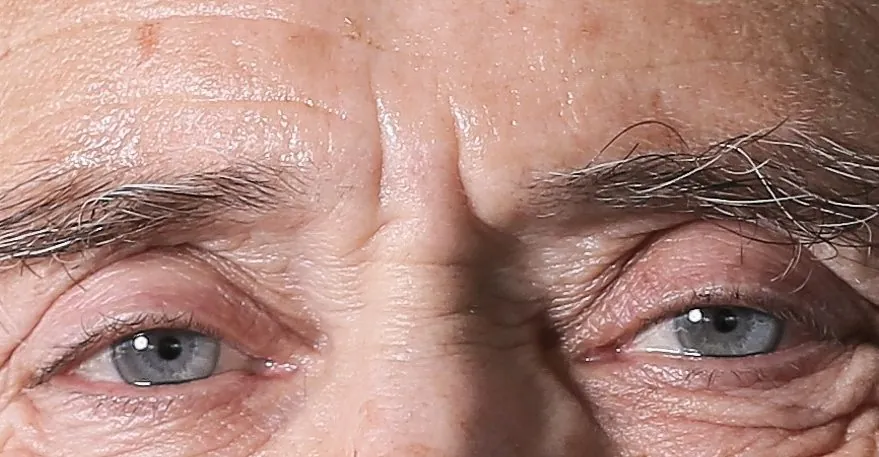
Deep static forehead lines etched into the skin at rest
Deep static forehead lines etched into the skin at rest. Image: Sukanto Debnath, via Wikimedia Commons (CC BY 2.0).
Vertical glabellar frown lines between the brows
Vertical glabellar frown lines between the brows. Image: EPFL-MEDIACOM, via Wikimedia Commons (CC BY 4.0).

What causes forehead lines and frown lines?

Horizontal forehead lines are the work of the frontalis — the sheet that raises your brows in every expressive sentence. The vertical '11s' and the horizontal crease at the nose root belong to the glabellar complex — corrugator and procerus — recruited by concentration, glare and negative emotion. Each contraction folds the same skin along the same perpendicular axis; young dermis springs back, thinning dermis keeps the crease. The network meta-analyses of randomised trials establish botulinum toxin type A as the evidence-anchored treatment for these dynamic lines [1,2] — among the most-studied interventions in aesthetic medicine.

The compensation trap — read this before treating the forehead

Here is the assessment subtlety that separates physician planning from menu ordering: in many patients the frontalis is not idly expressive — it is holding the brows up to keep heavy or hooded lids out of the visual field. Relax that recruited frontalis fully and the brows settle, the hooding lands, and the patient reports heaviness — the classic over-treatment complaint. The examination therefore reads brow position and lid reserve first; where the forehead is compensating, treatment is conservative, pattern-adjusted, and sometimes redirected to the actual problem — the brow and lid — via energy-based lifting (HIFU, Time Freeze) rather than more relaxation of the muscle doing the lifting.

What actually works for forehead and frown lines?

For dynamic lines: conservative, pattern-mapped botulinum toxin — the approach of the wrinkle prevention programme — with meta-analytic support for both glabellar and combined upper-face treatment [1,2]. For lines already etched at rest: the skin arm joins — fractional resurfacing and biostimulation (polynucleotides, bio-remodelling) to rebuild the dermis the crease carved through. Deep static glabellar folds occasionally warrant careful filler — a high-caution zone reserved for experienced hands. And where deflated temples unframe the brow, support there changes the upper face's whole read.

What doesn't work for forehead and frown lines?

Forehead-training and 'face yoga' for lines authored by muscle activity — strengthening the author writes more. Anti-wrinkle creams against static folds — surface hydration softens texture, not carved dermis. Freezing the forehead flat while ignoring why it was working — the compensation trap in action. And treating the forehead in isolation forever — etched lines announce that the skin arm is overdue, and toxin alone cannot un-carve them.

“Before relaxing a hard-working forehead, ask what it is working on — half the time it is holding your eyelids open.”

— Dr Sin Yong

Dr Sin Yong’s Viewpoint

Before I relax a hard-working forehead I ask what it is working on — half the time it is holding heavy eyelids out of the visual field, and freezing it flat delivers the heaviness the muscle was hiding. Pattern-mapped, conservative dosing exists precisely for this. The forehead is an exam question, not a menu item.

Prefer Not to Use WhatsApp?

Use the short enquiry form instead →

Leave your name, mobile number and email and the clinic will contact you directly. No obligation.

Your details are delivered directly to Dr Sin Yong's clinic team.

Thank you — your enquiry has been received. The clinic will contact you during opening hours (Mon–Fri 10am–8pm, Sat 11am–3pm).

Prefer a preliminary view first? You can also WhatsApp a photo of the area for Dr Sin Yong to review before you decide on a visit.

Which type do you have?

Types of forehead and frown lines
Type / look-alikeHow to recognise itWhat it needsWhat does not work
Dynamic horizontal forehead linesLines appear only when raising the browsConservative, pattern-mapped botulinum toxin after brow assessmentFace yoga and forehead exercises
Vertical frown lines ('11s')Vertical creases between the brows on frowningBotulinum toxin for the glabellar complexCreams for lines made by muscle
Static etched lines (present at rest)Creases visible at rest with the face relaxedSkin-directed treatment such as resurfacing or biostimulationToxin alone without skin treatment
Compensation lines (forehead lifting heavy lids)Forehead works to hold heavy or hooded lids openBrow and lid assessment, with lifting aimed at the causeFreezing the forehead flat

What does not work, and why

When to see a doctor

Myths we hear in clinic

“Forehead lines can be exercised away.”

Lines are written by muscle contraction, so strengthening that muscle tends to deepen them rather than smooth them.

“The more the forehead is relaxed, the better the result.”

A forehead holding heavy lids open can leave the brows and lids feeling heavy if relaxed fully, so dosing is conservative.

Questions Patients Actually Ask

Why do I have forehead lines in my twenties?+

Expressive frontalis recruitment plus genetics — and often early brow compensation for naturally low-set or heavy lids. Early lines are dynamic and the most preventable stage.

Will toxin erase lines that are there at rest?+

It softens their author, so etched lines stop deepening and partially smooth — but a fold carved into the dermis also needs skin-directed rebuilding. Two problems, two arms.

Why did my eyelids feel heavy after treatment elsewhere?+

Likely a fully relaxed frontalis that had been compensating for lid hooding — the settling brows delivered the heaviness the muscle was hiding. Pattern-mapped conservative dosing exists to avoid exactly this.

How often is treatment repeated?+

Toxin's effect runs in months and maintenance is individual. The honest framing is a maintenance rhythm agreed at review, not a fixed universal number.

Are the '11s' bad for how people read me?+

Etched glabellar lines read as anger or worry even at rest — the classic 'you look upset' feedback. That misread, not vanity, is what brings many patients in.

Can screens really cause frown lines?+

Hours of concentration and glare recruit the glabellar complex daily — screen life is a genuine accelerant. Managing glare helps; it does not retire the muscle.

What causes forehead lines and frown lines?+
Muscle activity. The frontalis raises the brows and creases the forehead horizontally, while the corrugator and procerus pull the brows down and in, forming the vertical '11s'. Each contraction folds the same skin, and as dermal collagen thins with age the creases stop springing back. Squinting, concentration and heavy lids add to the load.
Can forehead and frown lines be fully removed?+
Not reliably, and a complete result cannot be promised. Botulinum toxin softens lines made by muscle movement, but lines already etched at rest also need skin-directed treatment. Skin quality, age, how deep the lines are and brow position decide what is realistic, and assessment states this before any plan.
Which treatment suits forehead and frown lines?+
It depends on the type. Dynamic lines may suit conservative, pattern-mapped botulinum toxin, etched lines may suit resurfacing or biostimulation, and a forehead compensating for heavy lids may need brow-directed lifting instead. Brow position, lid reserve, line depth and skin quality are examined before the choice is made.
How much does forehead and frown line treatment cost in Singapore?+
The fee depends on the muscles and areas treated, the product or device chosen, how many zones are planned, and whether toxin is combined with skin treatment. Dr Sin Yong gives a written quote at consultation after brow and lid assessment, which also decides whether treatment is advised or redirected to the brow.

References

  1. Efficacy and Safety of Botulinum Toxin Type A for Treatment of Glabellar Lines: A Network Meta-Analysis of Randomized Controlled Trials — Dermatologic Surgery (PubMed).
  2. Efficacy and Safety of IncobotulinumtoxinA for the Simultaneous Treatment of Upper Facial Lines: A GRADE-Assessed Systematic Review and Meta-Analysis — PMC.

Medically reviewed by Dr Sin Yong, MBBS (NUS), MRCS (Edinburgh) · Last updated 7 September 2026 · Editorial policy

Related reading
Follow Dr Sin Yong
InstagramTikTokYouTubeThreadsXLinkedInFacebook
Dr Sin Yong · Every assessment personally performed
WhatsApp Enquiry