Medically reviewed by Dr Sin Yong · Last reviewed · 20 min read · Doctor-performed, never delegated · Jump to questions
Dr Sin Yong · MBBS (NUS) · MRCS (Edin) · MSc Aesthetic Medicine with Distinction (Queen Mary, London) · MSc Practical Dermatology (Cardiff) · International KOL
A skin booster is not a filler. It adds no volume and does not change facial shape — it is injected to act on the quality of the skin itself. Several distinct classes exist, and they are not interchangeable.

Skin booster treatment in Singapore uses injectables placed into the skin to change its quality rather than its shape, adding no volume. Several classes exist, including hyaluronic acid boosters and Profhilo®, and they are not interchangeable, so Dr Sin Yong chooses between them after assessment.
Also called: skinbooster injections, 水光针, 水光注射
The term covers a group of injectables that share one property: they are placed into the skin to change its quality rather than its shape. Fine lines, laxity, dullness and surface texture are the territory. Volume and contour are not.
That distinction matters more than the brand names. A patient who wants a hollow cheek corrected needs a filler. A patient whose skin has thinned and lost elasticity needs something else entirely, and giving them filler produces a face that is fuller but no better in quality.
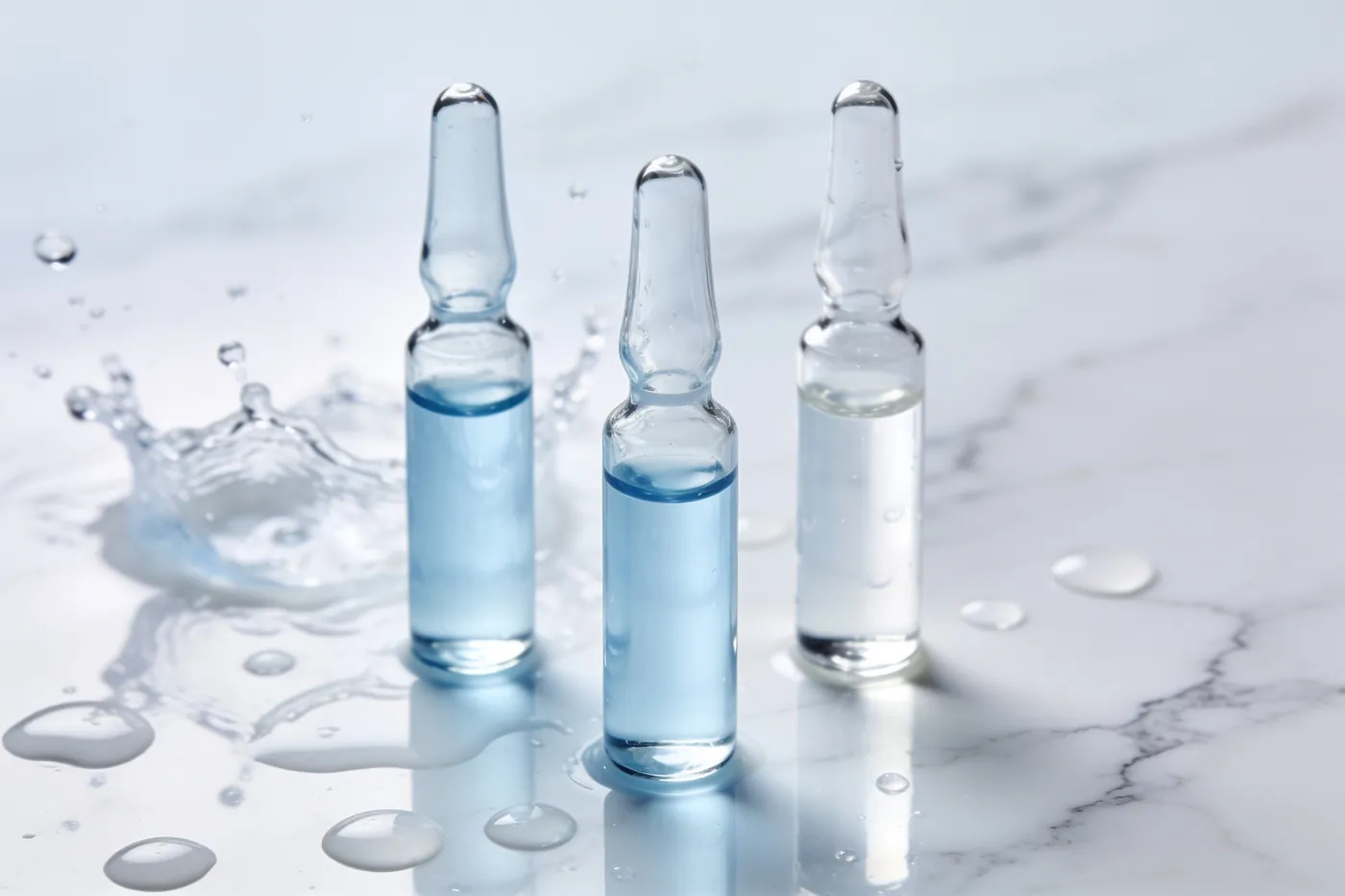
A hyaluronic acid skin booster hydrates and supports the dermis. Profhilo® is the bio-remodelling variant — hybrid complexes of high and low molecular weight HA, bonded thermally rather than with a chemical cross-linker, which spread through tissue planes and stimulate rather than fill.

Polynucleotides work differently again. Rejuran® delivers polynucleotide fragments purified from salmon DNA, directed at fibroblast activity and the extracellular matrix.
PDLLA acts as a scaffold, recruiting the patient's own collagen over the weeks that follow rather than adding material that stays.
Which of these suits you depends on what your skin is actually short of. That is a question for examination.
Skin quality has more than one input. An injectable addresses the dermal environment; it does not address pigment, and it does not lift descended tissue.

There is also a needle-free route. The Deep Synergy Booster delivers its actives from the surface using focused ultrasound rather than a needle, which means it cannot place product at a chosen depth — the trade some patients prefer, and the reason it is not a replacement for an injectable where placement matters.
Where pigment is the presentation, a laser approach applies. Where the issue is structural descent, energy-based lifting is the relevant tool. Boosters are frequently planned alongside these rather than instead of them.
“A skin booster treats the quality of the skin. A filler occupies space. Confusing the two is the most common error patients arrive with.”
Dr Sin YongOn the distinction
Treatment is planned individually, so the cost follows the plan rather than a fixed list. Four things shape it:
A figure quoted before assessment would not reflect your presentation. Cost is set out clearly at consultation, before anything is agreed.
Profhilo® bio-remodelling is covered in more detail under Profhilo in Singapore.
After a skin booster injection, most people notice small raised points where the product was placed, some redness, and occasionally bruising; these are expected and settle on their own. How visible they are depends on the class of booster, the area and your skin — polynucleotides, for example, tend to leave more noticeable bumps at first than a hyaluronic acid booster.

For the first day or so, the advice is to leave the area alone: no massage, facials, heavy exercise, saunas or alcohol, and make-up only when you are told it is reasonable. Gentle cleansing and a plain moisturiser are fine, and sun protection matters as always. Specific instructions are given on the day, because they differ slightly between products.
Some people feel their skin looks more hydrated soon after a hyaluronic acid booster; collagen-directed classes such as PDLLA and polynucleotides work gradually, so their effect is judged later rather than in the first few days.
If swelling increases rather than settles, or an area becomes increasingly painful, hot or discoloured, contact the clinic promptly rather than waiting for the review.
How often skin boosters are repeated depends on which class is used and what the skin is short of; there is no single schedule that suits everyone.
Most plans have two phases. An initial phase builds the effect, with treatments spaced to suit the product — hyaluronic acid boosters, Profhilo®, polynucleotides and PDLLA each have their own rhythm because they work differently. A maintenance phase follows, with treatments spaced further apart, timed by how your skin holds the change rather than by the calendar alone.
What shapes the timing is the same set of factors that shape the choice of booster: the condition of the skin, age, sun exposure, smoking, and whether other treatments such as laser or energy-based lifting are in the same plan. Hyaluronic acid is broken down by the body over time, while collagen-directed classes rely on your own tissue response, which varies between people.
Rather than fixing the whole course in advance, the plan is reviewed after each phase. If your skin is holding well, the interval lengthens; if a different class would serve you better, that is discussed.
Skin boosters are often requested for acne scars, enlarged pores and the under-eye area, and in each case they help with one part of the problem rather than the whole of it.
For acne scars, a booster can improve the quality of the skin around the scars, but it does not release tethered scars or rebuild a scar base. Those jobs belong to subcision, RF microneedling, fractional CO2 resurfacing and TCA CROSS, matched to the scar type; a booster may sit alongside them in a plan.
For pores, better hydration and dermal support can make the surface look smoother, but a pore is a structure and no injection shrinks it. Dermal remodelling with energy-based treatment addresses the collagen around pores more directly.
Under the eyes, polynucleotides and other boosters can act on thin, crepey skin. They do not correct a tear trough hollow, which is a volume deficit, and they do not reduce herniated fat. Which of these is present is established at assessment before any product is chosen.

| Option | What it does | What it cannot do | Typical recovery | Who it tends to suit |
|---|---|---|---|---|
| Hyaluronic acid skin booster | Hydrates and supports the dermis, spreading through tissue rather than occupying space | Add volume, change facial shape or lift descended tissue | Small raised injection points, redness or bruising that settle | Dehydrated, dull skin with fine surface lines |
| Profhilo® bio-remodelling | Hybrid high and low molecular weight HA, thermally bonded, spreads through tissue planes and stimulates rather than fills | Replace a filler where volume or contour is the issue | Small bumps at the injection points that settle | Early loss of firmness and crepey skin quality |
| Polynucleotides (Rejuran®) | Delivers purified polynucleotide fragments directed at fibroblast activity and the extracellular matrix | Add volume or correct a hollow | Visible bumps at injection points for a short period, with possible redness or bruising | Thin or fragile skin and texture concerns where repair, not volume, is wanted |
| PDLLA biostimulator | A resorbable polymer that acts as a scaffold, recruiting the patient's own collagen over the following weeks | Give an immediate change or restore structural volume | Possible swelling, redness or small bumps that settle | People prepared for gradual change in skin firmness and texture |
| Deep Synergy Booster (needle-free) | Delivers actives from the surface using focused ultrasound, without a needle | Place product at a chosen depth, as an injectable can | Usually little visible marking; varies with the skin | Patients who prefer a needle-free route and accept the trade-off in placement |
| Dermal filler (for comparison) | Occupies space to restore or create volume and contour at specific points | Improve the quality, hydration or elasticity of the skin itself | Possible swelling and bruising that settle | Hollows and contour loss rather than skin-quality concerns |
NCTF 135HA is a hyaluronic acid skin booster combined with a mixture of vitamins, amino acids, minerals, coenzymes and nucleic acids. 'Chanel injection' is a nickname used in parts of Asia; the product has no connection with the fashion house of that name, and the nickname says nothing about what it does.
It is made by the French laboratory Fillmed, previously known under the Filorga name. The hyaluronic acid is non-cross-linked, so it hydrates rather than adding volume, and it is delivered by many fine micro-injections or a needling technique into the superficial dermis, in the manner of mesotherapy.
In the classes described above, it sits with the hydrating hyaluronic acid boosters. It is directed at dull, dehydrated skin and fine surface lines. It does not fill hollows, lift descended tissue or treat pigment, and it is not interchangeable with polynucleotides or PDLLA, which act through different mechanisms.
Small raised points, redness and occasional bruising are expected afterwards and settle on their own. Whether a multi-ingredient booster of this kind suits your skin, or whether another class would serve it better, is decided at assessment rather than by the name.
A skin booster is deferred where there is active infection, inflammation, a cold sore, an acne flare or eczema at the injection sites, and in pregnancy and while breastfeeding. It is not used in anyone allergic to a component of the product chosen: hyaluronic acid for HA boosters and Profhilo®, and fish for polynucleotides such as Rejuran®, which are purified from salmon DNA. Products containing lidocaine are avoided where there is a local anaesthetic allergy.
Caution, rather than a flat refusal, applies to autoimmune disease, a history of severe allergic reactions, a tendency to keloid scarring, and a bleeding tendency or blood-thinning medicines. Previous filler or threads in the area, and a recent laser or peel, change the timing. A booster is also the wrong treatment for anyone whose main concern is a hollow, descent or pigment, because it addresses none of those. Which class suits, and whether any does, is decided at consultation.
Skin boosters place small amounts of product in the skin, but they are still injections and carry risks that are explained beforehand. Expected effects are small raised points, redness, swelling, tenderness and bruising, which settle on their own.
Less common are lumps or nodules where product sits unevenly or too superficially, a bluish tint where hyaluronic acid lies too close to the surface, a flare of cold sores, and infection. Delayed inflammatory reactions, appearing weeks later as tender swelling, are rare, as are allergic reactions, which is why component allergies, including fish allergy for polynucleotides, are asked about directly. Any injectable carries a small risk of product entering a blood vessel; with fine superficial placement it is uncommon, but pain, blanching or dusky skin after treatment needs prompt attention.
These risks are reduced by choosing the class for the skin, sterile technique, placement at the right depth for each product, and treatment by a doctor who can manage a complication.
The sequence below describes phases, not a timetable: how quickly each passes depends on the settings used, the area and the person, and is discussed at consultation.
It is the wrong tool for anyone whose main concern is a hollow, descended tissue or pigment, because a skin booster addresses none of those.
The fee for a skin booster depends on the area treated, since a single zone differs from several, and on what the assessment finds, because the cause of the concern decides which class of booster suits. It also depends on the product and consumables used, whether one modality or several are combined, such as a booster with laser or energy-based lifting, and how the plan is staged. A written quote is given at consultation after assessment, and the consultation decides whether treatment is advised at all.
How quotes work at this practice: how we quote.
A filler occupies space to restore volume and contour, while a booster changes skin quality without adding volume.
Hyaluronic acid boosters, Profhilo, polynucleotides and PDLLA work through different mechanisms, so the class is chosen for what your skin is short of.
Skin booster is a family name, not a single product, and the classes differ in what they are made of, how they are placed and what they are for. The table lays them side by side, including two items that are often grouped with boosters but are not the same thing: a collagen-stimulating biostimulator and a topical exosome product. This page counts PDLLA among the booster classes because it is placed into the skin to act on skin quality, but it behaves as a biostimulator, which is why it is listed with PLLA here. Which class suits you is decided at examination, by what your skin is short of, not by brand name.
| Class | Molecule class | How placed | What it is for | Who should avoid |
|---|---|---|---|---|
| Hyaluronic acid (Profhilo-type) | Hyaluronic acid; Profhilo uses thermally bonded high and low molecular weight chains | Fine injections that spread through tissue planes | Hydration, dermal support and early loss of firmness | Allergy to hyaluronic acid or lidocaine; infection or acne flare at the sites |
| PN or PDRN (Rejuran-type) | DNA-derived polymers, purified from salmon in Rejuran; PDRN fragments are shorter | Many small injections into the dermis, with bumps at first | Thin, fragile skin and texture where repair, not volume, is wanted | Fish allergy; infection at the sites; pregnancy or breastfeeding |
| PLLA or PDLLA biostimulator (not a booster) | Poly-lactic acid polymers acting as a scaffold for the body's own collagen | Injected by a doctor at a depth chosen for the product | Gradual change in firmness and texture, judged later | Allergy to a component; infection; pregnancy; bleeding tendency needs caution |
| Exosome (topical) | Extracellular vesicles of roughly 30 to 150 nm, from cell culture or plants | Applied to the skin surface, usually after laser or microneedling; not injected | An adjunct after a procedure; the human evidence is early | Open or infected skin; allergy to an ingredient; expecting a stated result |
Three words are used loosely in this field, and the differences decide what you are actually buying. A dermal filler occupies space: it is placed at specific points to restore or create volume and contour. A skin booster does not occupy space; it spreads through the dermis and acts on its quality, meaning hydration, elasticity and texture, and it adds no volume or change of shape. A biostimulator is an injectable that prompts the body to lay down its own collagen over time, so its effect develops gradually and is judged later. Radiesse, Sculptra (PLLA) and Ellansé (polycaprolactone) belong to that group, and the brand name is less informative than the mechanism.
The classes overlap at the edges, which is where confusion starts. Profhilo is hyaluronic acid but is designed to stimulate as well as hydrate, so it sits between a booster and a biostimulator. PDLLA is placed into the skin like a booster but acts as a scaffold for collagen. There is a practical difference as well: hyaluronic acid can be dissolved with hyaluronidase, whereas biostimulators cannot. A hollow cheek needs a filler, thin crepey skin needs something that acts on quality, and descended tissue needs a lifting mechanism, so choosing the wrong category gives a result that is fuller but no better in quality.

Studies of skin boosters measure specific features of skin quality, not how a face looks to you in the mirror, and the distinction is worth keeping in mind. A 2023 systematic review of injectable hyaluronic acid for facial skin quality included 13 clinical studies and described what they measured: hydration, firmness, brightness, texture, radiance and elasticity. The authors described the evidence as promising, noted that treatment with hyaluronic acid alone was reported to do better than combination cocktails, and called for larger randomised trials. That is a statement about measured skin-quality features in the studies reviewed, not a prediction for an individual face.
The evidence for polynucleotides is thinner. A 2024 systematic review of polynucleotides in aesthetic medicine found nine studies that varied in design, sample size and outcome measures, and none achieved full marks on critical appraisal. Its authors judged the potential promising but noted limited agreement on optimal use and asked for rigorous, high-quality trials. A third review compares polynucleotides with PDRN, explaining that they differ in fragment length and in how they act. Taken together, boosters have been studied for skin-quality measures and the quality of that evidence varies. The reviews are about skin quality, not about volume, lift or pigment, which is why no claim is made about those here.
How to plan aesthetic treatment backwards from a wedding date: what needs review cycles, what not to start late, and…
Skin boosters with RF microneedling: why the two are combined, which goes first and why, how spacing is set at review,…
A skin booster is an injectable treatment directed at the quality of the skin rather than its shape. It is placed into the dermis to act on hydration, elasticity and texture. Unlike a dermal filler, it adds no volume and does not alter facial contour.
A dermal filler occupies space and changes contour; it is placed in specific locations to restore or create volume. A skin booster spreads through tissue and acts on the skin itself. They answer different complaints, and a patient wanting better skin quality is not helped by added volume.
The right skin booster depends on what the skin is short of. Hyaluronic acid boosters address hydration and dermal support. Polynucleotides act on fibroblast activity. PDLLA and similar biostimulators recruit the patient's own collagen over time. Suitability is decided at in-person assessment rather than by choosing from a menu.
Skin boosters are used across skin types, but suitability is assessed individually. Active infection or inflammation at the treatment site, certain medical conditions, pregnancy, and known sensitivity to a product's components are among the things considered at assessment.
Cost depends on which class of booster is appropriate, how many areas are treated, and how the plan is staged. Because the right approach differs between patients, a figure quoted before assessment would not be meaningful. Pricing is discussed at consultation once the plan is clear.
A skin booster injection session distributes product across the treatment area through fine needles or a cannula, with the pattern determined by the product and the area. Comfort is discussed and managed during the session.
水光针 is the popular term for hydrating micro-injections, usually of hyaluronic acid placed in many small points across the face. It is one type of skin booster, but the term is used loosely; polynucleotides, Profhilo® and PDLLA are different classes doing different jobs.
Small raised points at the injection sites are expected and settle on their own. They tend to be more noticeable with polynucleotides than with hyaluronic acid boosters. Redness and occasional bruising are also possible, and what to expect for your product is explained beforehand.
It depends on the class. Hyaluronic acid boosters mainly hydrate and support the dermis; Profhilo® is designed to stimulate as well as hydrate; PDLLA acts as a collagen biostimulator; polynucleotides are directed at fibroblast activity. The class is chosen for what your skin needs.
Yes, and they often are. A booster addresses the dermal environment, while lasers address pigment and surface texture and energy-based lifting addresses descended tissue. The order and spacing of treatments are planned so each does its own job.
It depends on the class. Hyaluronic acid boosters are broken down gradually by the body, so their hydrating effect fades unless it is maintained, while collagen-directed classes such as PDLLA and polynucleotides work through your own tissue response, which develops slowly and varies between people. Age, sun exposure, smoking and the condition of the skin all affect how long a change holds. Rather than a fixed duration being promised, the plan is reviewed after the initial phase and maintenance is timed by how your skin is holding.
Most people describe a series of small pricks with some stinging as the product goes in, and the sensation varies with the area, the product and individual sensitivity. Numbing cream is usually applied beforehand, some products contain a local anaesthetic, and in some areas a cannula reduces the number of entry points. The skin around the mouth and under the eyes tends to feel more sensitive than the cheeks. Comfort is checked during the session, and it is fine to ask for a pause.
Mesotherapy describes a technique: many small, superficial injections of a solution into the skin. A skin booster describes a purpose: improving skin quality rather than shape. Some boosters are delivered by a mesotherapy technique, others by fewer deeper injection points or a cannula, so the two terms overlap without meaning the same thing.
No. NCTF 135HA is non-cross-linked hyaluronic acid with added vitamins, amino acids and other ingredients, used mainly for hydration. Rejuran is a polynucleotide booster directed at fibroblast activity, and Profhilo is a thermally bonded high and low molecular weight hyaluronic acid designed to spread through tissue and stimulate as well as hydrate. Each answers a different shortfall in the skin.
The cost follows the plan rather than a fixed list. It depends on the area treated, what the assessment finds, which class and amount of product is used, whether a booster is combined with laser or energy-based treatment, and how the plan is staged. A written quote is given at consultation after assessment, before anything is agreed, and the consultation decides whether treatment is advised.
It can suit people whose concern is skin quality, such as dullness, dehydration, fine lines, crepey texture or early loss of firmness, and who accept gradual change. It is not worth choosing for hollows, descended tissue, pigment or tethered scars, which a booster does not address. Whether it suits you, and which class, is decided at examination.
Small raised points, redness, swelling and bruising are expected and settle on their own, and polynucleotides can leave more visible bumps at first. Less common risks include lumps, a bluish tint, cold sore flares and infection. A booster adds no volume, does not lift tissue or treat pigment, and collagen-directed classes work gradually, so effect is judged later.
Question not answered here? Ask on WhatsApp, use the enquiry form, or browse 100 questions patients ask.
“A moisturiser sits on your skin. This is a different conversation, at a different depth.”Dr Sin Yong
Skin Boosters vs Moisturiser
Medically reviewed by Dr Sin Yong, MBBS (NUS), MRCS (Edinburgh) · Last updated 7 October 2026 · Editorial policy
Consultations by appointment at Orchard Road, Singapore.
Replies within clinic hours: Mon–Fri 10am–8pm, Sat 11am–3pm · How consultations work · Prefer not to use WhatsApp? · Treatment finder
WhatsApp +65 8023 7170 →