DEKA SmartXide Tetra Pro · CO2 Platform · Centre of Excellence · Dr Sin Yong

DEKA Tetra Pro — The CO2 Platform Behind the SCAR3 Protocol

Medically reviewed by Dr Sin Yong · Last reviewed · 9 min read · Jump to questions

Dr Sin Yong · MBBS (NUS) · MRCS (Edin) · MSc Aesthetic Medicine with Distinction (Queen Mary, London) · MSc Practical Dermatology (Cardiff) · International KOL

DEKA Tetra Pro in Singapore refers to the SmartXide Tetra Pro, a fractional CO2 laser whose Pulse Shape Design technology lets the physician choose the shape of each pulse as well as its energy. At Dr Sin Yong's practice it anchors the resurfacing step of the SCAR3 acne scar protocol, after subcision and TCA CROSS.

Also called: fractional CO2 laser, 点阵激光, フラクショナルCO2

Key takeaways
  • The DEKA SmartXide Tetra Pro is a fractional CO2 laser (10,600 nm) used for the resurfacing step of acne scar work.
  • Pulse Shape Design lets the physician shape how each pulse rises, dwells and tails off, matching settings to scar geometry.
  • Scar type decides the method: tethered scars and icepick tracts are usually released first with subcision or TCA CROSS.
  • It creates a controlled wound, so active acne, infection, pregnancy and fresh tanning defer treatment; suitability is decided at consultation.
  • Dr Sin Yong, an aesthetic physician, performs it after scar mapping and a medical history.

What the Tetra Pro is

The SmartXide Tetra Pro is DEKA's flagship fractional CO2 laser — a 10,600 nm surgical-grade resurfacing platform whose defining feature is pulse control. Its PSD (Pulse Shape Design) technology lets the physician choose not just how much energy reaches the skin but the shape of each pulse — how abruptly it rises, how long it dwells, how it tails off. In scar work that control is everything: the difference between remodelling a boxcar wall and simply heating it.

“The laser is only half the treatment. The pulse shape chosen for each scar is the other half.”

— Dr Sin Yong

Why pulse shape matters for acne scars

Acne scars are architectural — walls, floors and tracts at different depths in the same square centimetre. A single fixed pulse treats them all identically; shaped pulses let ablation go deep and narrow where a scar edge needs sculpting, then shallow and wide where the surrounding texture needs blending. The result is resurfacing matched to each scar's geometry rather than a uniform burn — the reason fractional CO2 remains the reference standard for atrophic scar resurfacing, and the reason the platform running it matters.

Where it sits in the SCAR3 protocol

At this practice the Tetra Pro anchors the resurfacing arm of the SCAR3 acne scar treatment protocol — sequenced after subcision and TCA CROSS have released tethered scars and collapsed icepick tracts, so the laser resurfaces skin that is free to remodel. The full structural philosophy is on the scar reconstruction page, and scar-type identification in the acne scar types guide.

The Centre of Excellence context

Dr Sin Yong's practice is a DEKA Centre of Excellence, and Dr Sin Yong is invited to share his clinical expertise on DEKA CO2 platforms with visiting physicians — including published case work with DEKA's clinical faculty. The platform page you are reading exists because the device is only half the treatment; the other half is the judgment applied through it, and that is what the assessment is for.

SY
Dr Sin Yong
MBBS (NUS, Singapore) · MRCS (Royal College of Surgeons, Edinburgh)
MSc Practical Dermatology (University of Cardiff, UK) · MSc Aesthetic Medicine with Distinction (Queen Mary University of London)
Graduate Diploma in Sports Medicine (Nanyang Technological University)
International Key Opinion Leader — CLASSYS | HIRONIC | DEKA | ALMA | FOTONA | LUTRONIC
Pioneered Protocols Time Freeze Laser LCLR® · VF Lift · RVR ProLift · S3 Resurfacing · FSX Laser · 4K Body Lift · G Lift · Luminescence Laser

The DEKA SmartXide Tetra Pro is the fractional CO2 platform anchoring the SCAR3 acne scar protocol at Dr Sin Yong's DEKA Centre of Excellence in Singapore; its pulse-shape control allows resurfacing matched to each scar's geometry, sequenced after subcision and TCA CROSS. This information is educational and is not a substitute for a medical consultation.

Medically reviewed by Dr Sin Yong, MBBS (NUS), MRCS (Edinburgh) · Last updated 7 October 2026 · Editorial policy

Who should not have Tetra Pro CO2 laser resurfacing?

Fractional CO2 resurfacing creates a wound that has to heal, so it is postponed during pregnancy, over an active skin infection, and while acne is still active; acne is generally brought under control before scar work begins. Anyone who has had cold sores should say so, as antiviral cover is commonly advised before ablative laser on the face. Freshly tanned skin is not treated, and photosensitising medicines and recent isotretinoin are discussed, as advice on the interval varies.

Conditions that slow or disturb healing call for caution or a different plan: a tendency to keloid or hypertrophic scarring, poorly controlled diabetes, immunosuppression, smoking, previous radiotherapy to the area, and active vitiligo. Darker skin is not excluded, but ablative resurfacing carries a higher risk of post-inflammatory pigment change in Fitzpatrick III to V skin, and settings are planned around that. Anyone who cannot accept a period of visible healing may be better served by a gentler option. Suitability is decided at consultation, after scar mapping and a medical history.
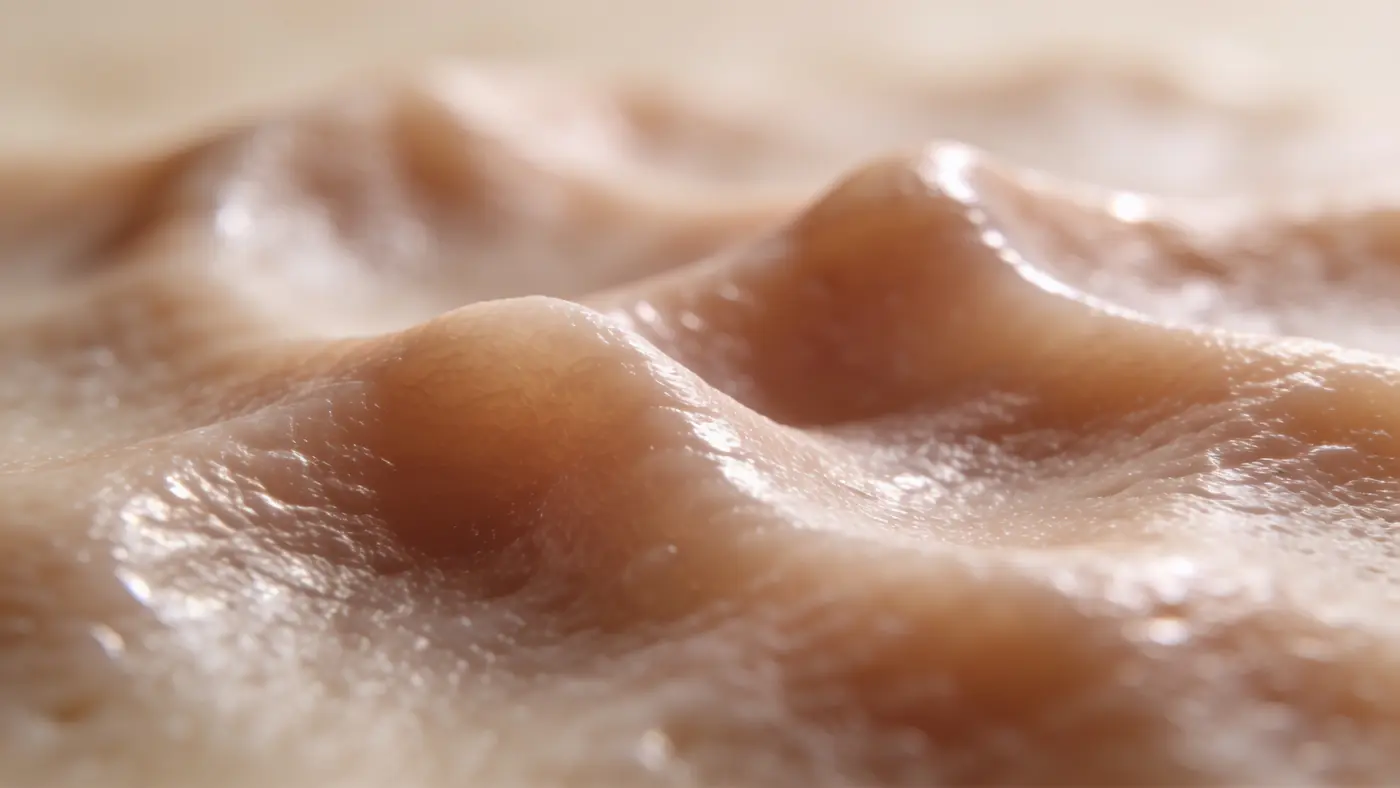
Close-up of uneven skin texture with raised and depressed areas
Scar type decides the method: release, resurfacing or filling.

Is fractional CO2 laser safe? The risks to know

Redness, swelling, pinpoint bleeding, oozing and crusting are expected after fractional CO2 and are part of healing rather than complications; how long they last depends on the depth and density used. Temporary darkening of the skin is the risk most relevant to Asian skin and can take weeks to months to fade.

A retrospective study of 490 deep fractional CO2 treatments in patients of Fitzpatrick skin types I to IV recorded adverse events after 13.6% of treatments, most often acne-like eruptions, cold sore outbreaks and bacterial or yeast infections, with hyperpigmentation after 1.2%. Rarer risks include scarring, redness lasting beyond a month, and lightening of the skin. Risk is reduced by scar mapping before treatment, pulse shape, depth and density chosen for each scar and skin type, antiviral cover where indicated, careful wound care, and strict sun protection while the skin heals. Any infection, unexpected pain or delayed healing is reviewed promptly at the clinic.

References
  1. The adverse events of deep fractional CO2: a retrospective study of 490 treatments in 374 patients — Lasers in Surgery and Medicine (Shamsaldeen O, Peterson JD, Goldman MP), 2011.

Medically reviewed by Dr Sin Yong · Updated 7 October 2026

What recovery looks like after DEKA Tetra Pro fractional CO2

The sequence below describes phases, not a timetable: how quickly each passes depends on the settings used, the area and the person, and is discussed at consultation.

  1. Immediately afterRedness, swelling, pinpoint bleeding and oozing are expected and are part of healing rather than complications.
  2. The first eveningGentle cleansing, bland moisturiser and antiviral cover where indicated; no picking, no actives, head raised overnight.
  3. The following daysCrusting and peeling develop and shed on their own; how long this takes depends on the depth and density used.
  4. As the skin settlesPinkness fades and collagen remodels gradually beneath the surface; strict sun protection continues throughout to limit pigment change.
  5. Follow-upInfection, unexpected pain or delayed healing is reviewed promptly, and the next step in the SCAR3 sequence is timed to the healed skin.

Who it suits, who should wait, who is referred on

Tends to suit

  • Boxcar and shallow rolling scars once acne is under control
  • Scars that have been mapped and planned as part of a sequence
  • Healthy skin with no active infection, cold sore or fresh tan
  • Willingness to accept a visible healing period

Better to wait

  • Pregnancy
  • Active acne, skin infection or cold sore
  • Recent isotretinoin, photosensitising medicines or fresh tanning, until the interval is discussed

Referred on

  • Suspected keloid or hypertrophic scarring → dermatology assessment
  • Extensive scar tissue needing surgical revision → plastic surgery assessment
Who should not have this treatment
  • Pregnancy
  • Active skin infection, uncontrolled acne or cold sore in the area
  • Tendency to keloid or hypertrophic scarring
  • Recent isotretinoin or photosensitising medicines, pending review
  • Poorly controlled diabetes, immunosuppression or smoking, which slow healing
  • Previous radiotherapy to the area or active vitiligo

People who cannot accept a visible healing period, or whose scars are mainly deep icepick tracts or keloid-prone, tend to respond poorly to fractional CO2 alone.

Before you book

What determines the fee

The fee depends on the scar types and area mapped at assessment, the depth and density of laser settings, and the number of zones treated. It also depends on whether the laser is combined with subcision, TCA CROSS or other steps of the SCAR3 sequence. A written quote is given at consultation after scar mapping and a medical history. The consultation also decides whether fractional CO2 is advised at all, or whether another approach or no treatment suits you better.

How quotes work at this practice: how we quote.

Myths we hear in clinic

“One laser fits every type of acne scar.”

Boxcar, rolling and icepick scars call for different methods, and tethered scars and icepick tracts are usually released first.

“Darker skin can never have fractional CO2.”

Darker skin is not excluded, but the risk of pigment change is higher, so settings and sun protection are planned around it.

Go deeper on DEKA Tetra Pro

A young woman with calm, even skin in profile against a plain background
Active acne is treated before scars are addressed.

Frequently asked questions

Who is not a good candidate for Tetra Pro CO2 laser?

Anyone who is pregnant, has an active skin infection or uncontrolled acne, or has a strong tendency to keloid scarring should not have fractional CO2 resurfacing at that time. Recent isotretinoin, photosensitising medicines and conditions that slow healing are discussed first, and anyone who cannot set aside time for the skin to heal may suit a gentler option. Suitability is confirmed at consultation.

What is the DEKA SmartXide Tetra Pro?

The SmartXide Tetra Pro is DEKA's fractional CO2 laser, working at 10,600 nm. Its Pulse Shape Design (PSD) technology lets the physician choose how each pulse rises, dwells and tails off, not only how much energy is delivered. At this practice it is used for the resurfacing step of acne scar work.

What does Pulse Shape Design mean on the Tetra Pro?

Pulse Shape Design controls the profile of each laser pulse: how abruptly it rises, how long it dwells and how it tails off. Acne scars sit at different depths within a small area, so shaping the pulse lets the physician match the resurfacing to each scar's geometry rather than apply one fixed pulse.

Where does the Tetra Pro fit in the SCAR3 protocol?

The Tetra Pro anchors the resurfacing arm of the SCAR3 acne scar protocol. It is sequenced after subcision and TCA CROSS, which release tethered scars and collapse icepick tracts, so the laser works on skin that is free to remodel. The order of steps is decided at assessment.

Is the Tetra Pro used for every type of acne scar?

No. Acne scars differ in type and depth, and boxcar, rolling and icepick scars call for different approaches. Tethered scars and icepick tracts are usually released first with subcision or TCA CROSS. Scar types are identified at assessment, and fractional CO2 resurfacing is one part of the plan, not the whole of it.

How much does Tetra Pro treatment cost in Singapore?

The fee depends on the scar types and area mapped, the settings used, the number of zones and whether the laser is combined with subcision or TCA CROSS. Dr Sin Yong maps your scars first, explains the options including no treatment, and gives a written quote at consultation. A figure cannot be responsibly given before the scars have been examined.

Is Tetra Pro worth it?

It tends to suit people with boxcar or shallow rolling scars who have controlled their acne, can accept a visible healing period and understand that improvement is gradual. It is less suitable for deep icepick tracts that need release first, for those prone to keloid, or for anyone who cannot protect healing skin from the sun. Consultation decides.

How long does Tetra Pro last?

No duration is promised. Collagen remodelling continues after healing, and how long any change is maintained depends on scar type and depth, your skin, sun exposure, new acne and how the rest of the plan is sequenced. Ongoing sun protection and acne control matter. Review timing is set at consultation and adjusted to how your skin has healed.

What are the disadvantages of Tetra Pro?

It creates a wound that must heal, so redness, swelling, oozing and crusting are expected. Temporary darkening is a particular concern in Asian skin, and infection, cold sore outbreaks and scarring are possible. It does not suit every scar type, treatment is staged, and strict sun protection is needed. Some people are better served by a gentler option.

Question not answered here? Ask on WhatsApp, use the enquiry form, or browse 100 questions patients ask.

Related reading

Acne Scar Assessment — Dr Sin Yong

Scar mapping first, platform second — the Tetra Pro is applied to a plan, not a face.

  1. 1WhatsApp a short note on your concern
  2. 2Consultation and assessment with Dr Sin Yong
  3. 3Options explained, including no treatment

Replies within clinic hours: Mon–Fri 10am–8pm, Sat 11am–3pm · How consultations work · Prefer not to use WhatsApp? · Treatment finder

WhatsApp Dr Sin Yong
Explore Further

Prefer Not to Use WhatsApp?

Leave your name, mobile number and email and the clinic will contact you directly. No obligation.

Your details are delivered directly to Dr Sin Yong's clinic team.

Thank you — your enquiry has been received. The clinic will contact you during opening hours (Mon–Fri 10am–8pm, Sat 11am–3pm).
Or continue on WhatsApp instead →
Follow Dr Sin Yong
InstagramTikTokYouTubeThreadsXLinkedInFacebook
Dr Sin Yong · Ask about acne scars · Doctor-performed
WhatsApp Enquiry