Medically reviewed by Dr Sin Yong · Last reviewed · 18 min read · Assessed personally by Dr Sin Yong · Jump to questions
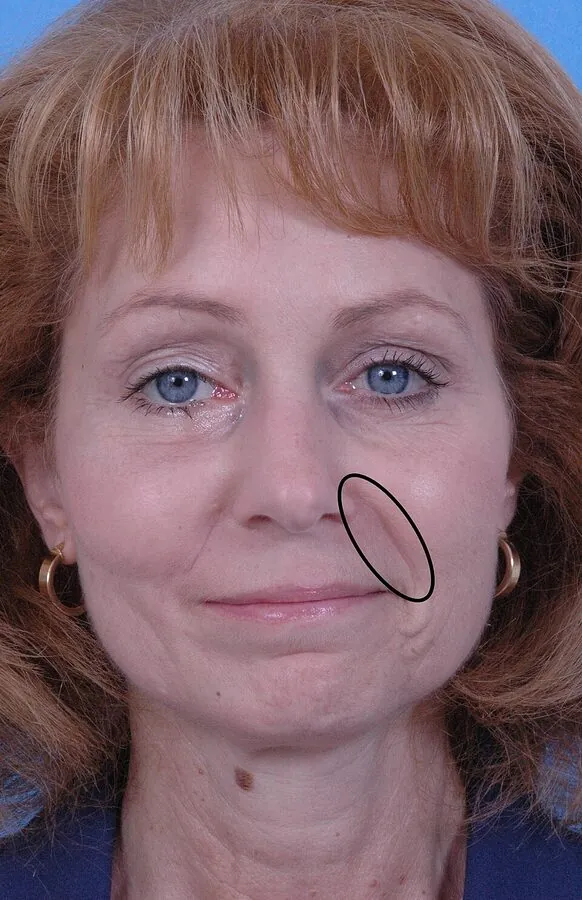
The nasolabial fold is the line running from each nostril to the corner of the mouth — present in every smiling face, and deepening at rest with age. Here is the counterintuitive truth of modern practice: the fold is usually the shadow of a problem happening above it, in the cheek — which is why the least sophisticated treatment is the one everyone asks for: filling the line itself.
WhatsApp Dr Sin Yong →Nasolabial folds treatment starts with the cheek above the fold, not the line itself. Where cheek deflation drives the fold, support is restored at the mid-face; where descent drives it, lifting such as VF Lift – Vertical Facelift is considered; conservative, deep filler at the fold comes last. Skin-quality treatment improves how the crease reflects light.


Every face has this fold — it is where the mobile cheek meets the fixed upper lip, and it creases every time you smile. What changes with age is the traffic arriving from above: the cheek's fat compartments — discrete, named structures in the anatomical literature [2] — deflate and slide downward, and the descending tissue piles up against the fold like snow against a fence. The fold does not so much deepen as become the collection point for everything the mid-face is losing. That is why it appears alongside cheek volume loss and early jowling — three symptoms of one descent.
The intuitive treatment — inject the crease — treats the shadow and ignores the object. Meta-analytic evidence supports hyaluronic-acid fillers for nasolabial fold correction [1], but modern technique reads that evidence anatomically: restoring the deflated cheek above often softens the fold more naturally than loading the fold itself, because it removes the tissue traffic rather than padding the collection point. Direct fold treatment still has a role — conservative, deep, and structural — but as the finishing move, not the opening one. Overfilled folds and cheeks are precisely how faces end up in pillow face territory, and unpicking that costs more than doing it right once.
Assessment starts above the fold: how much is cheek deflation (restore support at the cheek and mid-face), how much is descent (the lifting conversation — VF Lift, HIFU-class energy), and how much is the fold's own etching (conservative structural filler at the fold, supported by the trial literature [1]). Skin-quality work — bio-remodelling, polynucleotides — improves how the crease reflects light. Most faces need the sequence, not a syringe in the line.
Face yoga against a structural fold — the crease is anatomy, not weakness. 'Smile line' creams — no topical reaches the fold's depth. Aggressive filling of the fold alone — the classic route to a heavy, simian mid-face that reads worse than the line did. And treating the fold while ignoring the deflating cheek above it — the traffic keeps arriving, and so do the appointments.
“The nasolabial fold is usually the shadow of the cheek above it — fill the shadow and you've padded the collection point while the descent continues.”
— Dr Sin Yong
The nasolabial fold is where I most often decline the treatment a patient arrives asking for. Filling the line is intuitive, quick to sell, and frequently wrong — the fold is usually collecting what the cheek above is losing. I treat the cause first, the crease last, and conservatively. It takes longer to explain than to inject, which is exactly why the explanation matters.
Use the short enquiry form instead →
Leave your name, mobile number and email and the clinic will contact you directly. No obligation.
Prefer a preliminary view first? You can also WhatsApp a photo of the area for Dr Sin Yong to review before you decide on a visit.
| Type / look-alike | How to recognise it | What it needs | What does not work |
|---|---|---|---|
| Cheek-deflation fold | Emptied mid-cheek above a deepening fold, often after weight loss | Support restored at the cheek and mid-face | Filling only the line itself |
| Descent-driven fold | Cheek tissue sits lower and piles against the fold | Lifting, such as VF Lift – Vertical Facelift, where indicated | Adding filler, which adds weight in the wrong place |
| Fold etched at rest | Crease visible at rest, not only when smiling | Conservative, deep structural filler at the fold, as a finishing step | Overfilling, which flattens the cheek-to-lip transition |
| Fold with surface quality change | Fine lines and a crease that reflects light unevenly | Skin-quality treatment such as bio-remodelling or polynucleotides | Smile line creams, which do not reach the fold's depth |
| Marionette lines (look-alike) | Lines running down from the mouth corners, separate from the fold | Separate assessment of lower-face support | Treating them as the same fold |
The fold is usually the shadow of the cheek above, so filling it alone pads the collection point while descent continues.
The crease is structural anatomy rather than muscle weakness, so exercise does not reach it.
Completely — every face makes them in animation at every age. The ageing change is when they carve in at rest. Treatment is elective aesthetics, never necessity.
Facial fat loss deflates the cheek compartments, and the deflating tissue settles against the fold. Significant weight loss commonly deepens nasolabial folds even as the body improves.
In experienced hands, with conservative technique, the trial evidence supports it — though this area contains the facial artery's path, which is exactly why anatomy-led injection matters here.
Overfilled folds flatten the natural transition between cheek and lip, producing the heavy 'monkey mouth' look. Restraint and treating the cause above the fold is the difference.
When descent is the driver, repositioning cheek tissue reduces what piles against the fold — often more naturally than any filler in the line.
The ageing process continues, so maintenance applies to every approach. Sequenced cause-first treatment tends to hold its result more gracefully than fold-stuffing.
Deep nasolabial folds at a young age usually reflect anatomy rather than ageing. The fold forms where the mobile cheek meets the fixed upper lip, so anything that makes the cheek fuller or the support beneath it flatter deepens the crease — even in someone in their twenties with no laxity at all.

The common contributors are structural. A flatter mid-face skeleton, with less forward projection of the upper jaw beside the nose, gives the cheek less to rest on. A full medial cheek fat pad adds weight on the cheek side of the fold. Strong upper-lip elevator muscles crease the fold deeply with every smile, and habitual expression repeats that crease many times a day.
Weight changes play a part too: rapid loss deflates the cheek, while weight gain adds bulk that folds more heavily. Sun exposure and smoking matter more later, through skin quality. The practical consequence is that a young, deep fold is rarely a reason for filler in the line. It calls for reading the cheek and skeleton first — and sometimes for no treatment, because a fold that only shows in animation is normal.
Smile lines and laugh lines are everyday names for the nasolabial folds; marionette lines are a separate crease. The nasolabial fold runs from each nostril to the corner of the mouth. Marionette lines run downward from the corners of the mouth toward the jawline and chin, and they belong to the lower face rather than the mid-face.
The distinction matters because the causes differ. The nasolabial fold is fed by deflation and descent of the cheek above it. Marionette lines are shaped by changes around the jawline and chin — loss of support, descent of tissue toward the jowl, and the pull of the muscle that draws the mouth corners down. A face can show one without the other, and treating the wrong one leaves the visible problem in place.
Vertical lines on the upper lip are a third, unrelated group: fine etched lines from lip movement and skin quality, treated very differently again. In consultation, the first task is to name which lines are present and which one is actually bothering you, because a plan for the fold does little for the mouth corners, and the reverse.
A nasolabial fold is beyond non-surgical treatment when the descent and loose skin behind it are greater than restoring volume or tightening can address. The signs are usually visible together: heavy tissue hanging over the fold, established jowls, a loose neck and skin that gathers rather than springs back when gently lifted.
In that situation, adding more filler is the route to a heavy, overfilled mid-face, and energy-based lifting may soften but not reposition the tissue. A surgical facelift or mid-face lift repositions descended tissue and removes excess skin, which is something no injectable or device does. Patients in that category are told so plainly and referred to a plastic surgery specialist for assessment.
Surgery is not the end of the conversation. A lift repositions tissue but does not restore the volume the cheek has lost, nor improve skin quality, so conservative volume and skin treatment may still have a role afterwards. The point of assessment is to match the treatment to the stage of the face, rather than stretching one approach beyond what it can do.

| Option | What it does | What it cannot do | Typical recovery | Who it tends to suit |
|---|---|---|---|---|
| Cheek and mid-face support with hyaluronic acid filler | Restores deflated cheek fat compartments above the fold, reducing the tissue that piles against it | Reposition heavy descent or erase a fold that has etched into the skin | Possible swelling and bruising that settle; hyaluronic acid can be dissolved with hyaluronidase if required | A fold driven mainly by cheek volume loss |
| Conservative, deep filler at the fold | Softens the fold's own etching as a finishing step | Address the deflation and descent above that feed the fold; overfilling flattens the cheek-lip transition | Possible swelling and bruising that settle; reversible with hyaluronidase if hyaluronic acid is used | An etched crease that remains once the cause above has been addressed |
| VF Lift – Vertical Facelift (Volnewmer monopolar radiofrequency) | Heats the deeper skin to work on laxity and the descent that loads the fold | Replace lost volume or fill an etched line | Varies between patients; discussed at consultation | Descent with skin laxity, where volume is reasonably preserved |
| HIFU (focused ultrasound) | Delivers focused ultrasound energy to deeper tissue layers to address descent | Replace lost volume or treat skin quality | Varies between patients; discussed at consultation | Descent-led folds in a face that does not need volume |
| Skin-quality treatment (bio-remodelling, polynucleotides) | Improves skin quality so the crease reflects light more evenly | Change the structure beneath the fold or fill it | Small raised injection points that settle | Thin or crepey skin over a moderate fold |
| Facelift surgery — referred to a plastic surgery specialist | Surgically repositions descended mid-face and lower-face tissue and removes excess skin | Restore lost volume on its own or change skin quality | Surgical recovery, guided by the operating team | Advanced descent and skin excess beyond the reach of non-surgical treatment |
Medically reviewed by Dr Sin Yong, MBBS (NUS), MRCS (Edinburgh) · Last updated 5 October 2026 · Editorial policy
Smile lines cannot be erased entirely, because the nasolabial fold is normal anatomy that forms every time you smile; what treatment can change is how deeply it sits at rest. Getting rid of a deepened fold starts with finding out what is feeding it, not with treating the line itself.
Three causes are separated at assessment. Where the cheek above has deflated, support is restored at the mid-face and the fold is reassessed before anything is placed in it. Where tissue has descended, lifting is the conversation: radiofrequency such as VF Lift – Vertical Facelift, focused ultrasound, or a thread lift for a defined descent. Where the crease has etched into the skin, conservative, deep filler at the fold is the finishing step, and skin-quality treatment improves how the crease reflects light.
Creams, face yoga and gadgets do not reach the structures involved. Sun protection and avoiding large swings in weight address two of the things that deepen the fold over time, and where descent and loose skin are advanced, referral to a plastic surgery specialist is the honest answer.
| Approach | What it addresses in smile lines | Limits | Where it fits |
|---|---|---|---|
| Hyaluronic acid filler, cheek first | Restores deflated cheek support above the fold; conservative, deep filler at the fold softens remaining etching | Does not reposition heavy descent; overfilling flattens the cheek-to-lip transition | Volume-led folds, with the fold itself treated last, if at all |
| Thread lift (Bliss Lift, PDO and PCL cog threads) | Repositions a descended malar fat pad along vectors from a temporal anchor across the cheek | Adds no volume and removes no skin; a fold driven by volume loss is not resolved by threads alone | Descent-led folds with skin that still has elasticity |
| Radiofrequency (VF Lift – Vertical Facelift, Volnewmer monopolar RF) | Heats the dermis and subcutis along vertical vectors to work on the laxity that loads the fold | Cannot replace lost volume or fill an etched line | Laxity where volume is reasonably preserved |
| Focused ultrasound (HIFU) | Places thermal coagulation points in deeper layers to work on descent | Cannot replace volume; used with caution in thin faces because of the risk of fat loss | Descent-led folds in a face that does not need volume |